
Quick Answer & Key Takeaways
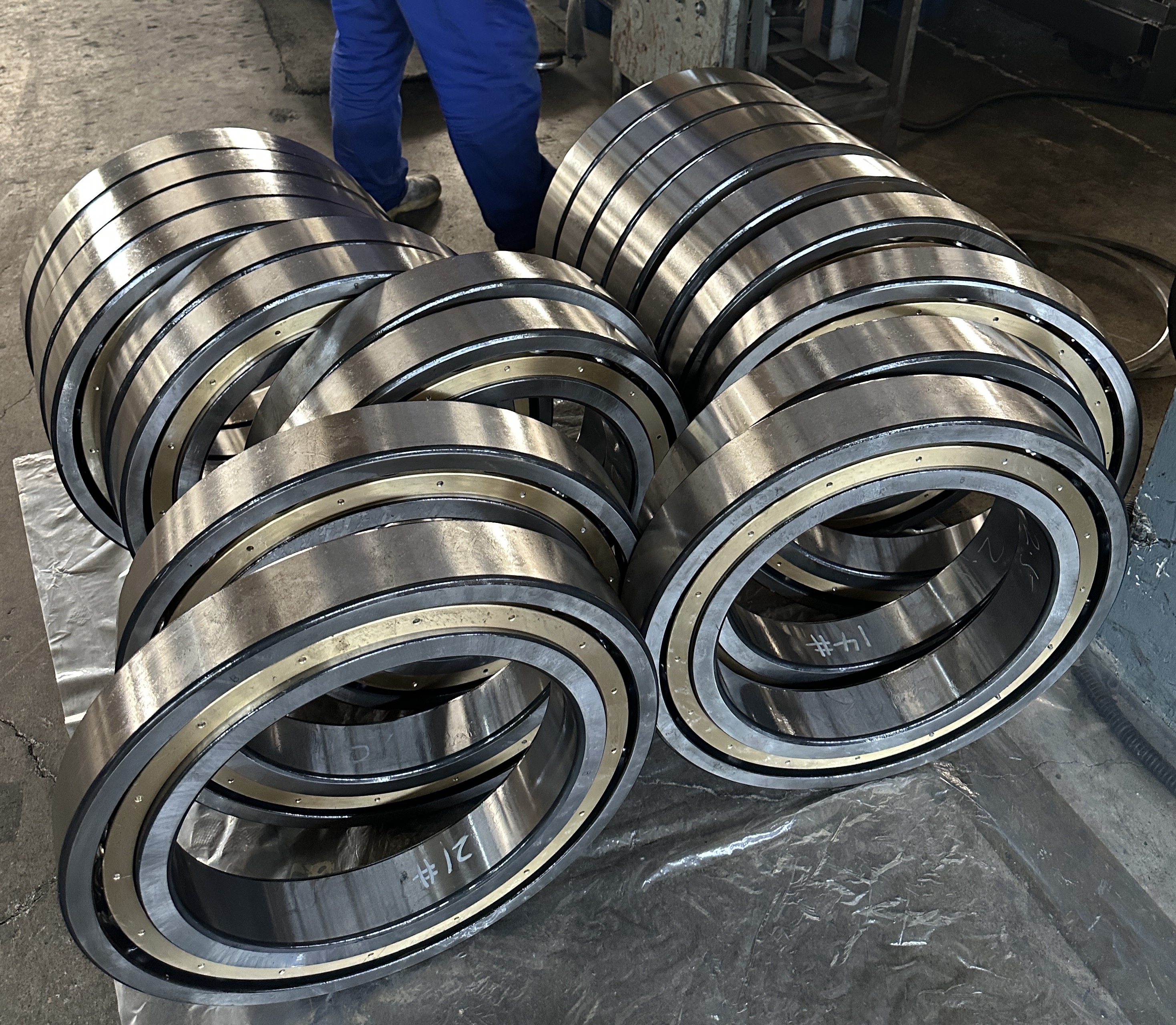
Deep groove ball bearings engineered for lithium battery electrode calendering presses provide low-friction rotational accuracy, high-speed stability, and strict cleanroom contamination control across auxiliary web-handling systems. While heavy-duty roller bearings support primary compaction rolls, precision deep groove ball bearings support high-speed guide rollers, web tensioning rolls, edge trimmers, and drive transmission shafts. Operating under continuous 24/7 manufacturing cycles in ISO Class 5 cleanrooms, these bearings feature super-finished raceways (P5/P4 precision class), specialized non-outgassing synthetic lubricants, and low-drag contact seals. Equipment engineers and procurement teams specify high-precision deep groove ball bearings to prevent web wrinkling, ensure consistent foil tension, eliminate metallic particle shedding, and maintain zero-defect electrode quality in gigafactories.
-
Sub-Micron Running Accuracy: P5 and P4 precision tolerances eliminate radial runout, preventing periodic tension spikes and thickness fluctuations in thin copper and aluminum foils.
-
Ultra-Low Frictional Torque: Optimized ball-to-raceway contact geometry minimizes rotational resistance, reducing energy consumption and preventing web slippage.
-
ISO Class 5 Cleanroom Compliance: Synthetic fluorinated greases and nitrile/fluororubber seals lock in lubricants and prevent micro-particulate shedding.
-
High-Speed & Multi-Axis Load Handling: Capable of handling high rotational speeds alongside combined radial and light bidirectional axial thrust loads in compact mounting envelopes.
What Are Deep Groove Ball Bearings in Battery Calendering Equipment?
Deep groove ball bearings in lithium battery electrode calendering equipment are high-precision rolling-element bearings designed to support rotating components with minimal friction and high running accuracy. Comprising an inner ring, an outer ring, a precision cage, and a single row of steel or ceramic balls, these bearings run within uninterrupted deep raceway grooves.
In electrode roll press systems, dried cathode and anode active materials are compacted onto delicate current collector foils. While the main press rolls utilize heavy roller bearings for multi-ton compression, deep groove ball bearings serve as critical components across surrounding web-guidening, slitting, and drive transmission units. Their low rotational inertia ensures smooth web travel without scratching or stretching active electrode coatings.
Critical Performance Demands in Battery Electrode Web Handling
Electrode processing in modern gigafactories subjects auxiliary rolling bearings to strict mechanical and environmental constraints:
-
Preventing Electrode Foil Wrinkling and Scrap: Ultra-thin current collectors (6–8 μm copper and 10–13 μm aluminum) are susceptible to tearing and creasing. Deep groove ball bearings provide smooth, uniform rotational torque across guide rolls, preserving constant web tension.
-
Eliminating Metallic Particulate Contamination: Stray conductive dust or grease droplets inside a battery cell can breach separators, causing internal short circuits and thermal runaway risks. Battery-grade deep groove ball bearings feature non-contact or light-contact rubber seals that contain grease and prevent wear debris from escaping.
-
Sustaining Continuous High Line Speeds: Modern calendering lines operate at line speeds exceeding 80 to 100 meters per minute. The pure point contact of deep groove ball bearings generates minimal heat at high rotational RPMs, preventing thermal expansion from altering shaft alignment.
-
Resisting Solvent Vapors and Cleanroom Environments: Bearings located near coating or drying zones must withstand residual solvent vapors (such as NMP) and low humidity levels without lubricant degradation or raceway corrosion.
Comparative Performance Analysis: Deep Groove Ball Bearings vs. Roller Bearings in Calendering Machinery
Achieving optimal machine performance requires matching rolling element geometry to specific machine locations and load conditions across web handling and roll press assemblies.
In load carrying characteristics, deep groove ball bearings handle moderate radial loads combined with bidirectional light thrust loads via point contact. Cylindrical and spherical roller bearings utilize line contact to support heavy radial forces. Consequently, roller bearings support main press roll necks, whereas ball bearings excel in secondary web-handling rolls where low rotational resistance is paramount.
Regarding operational friction and rotational speed, deep groove ball bearings exhibit lower running torque and heat generation than roller bearings. This low friction enables small guide rollers to spin freely under minimal foil contact pressure, preventing current collector scuffing.
In terms of precision class and runout control, deep groove ball bearings manufactured to ISO P5 or P4 classes achieve low radial and axial runout. This precision prevents high-frequency vibration during web passage, avoiding chatter marks on calendered coatings.
Finally, mounting simplicity and maintenance favor deep groove ball bearings. Supplied as non-separable, factory-sealed units pre-lubricated with cleanroom-rated grease, they require no field greasing, lowering maintenance overhead and eliminating lubrication contamination risks.
Key Industrial Applications in Battery Production Lines
Deep groove ball bearings deliver essential motion control across multiple functional modules within electrode calendering machines:
1. Web Guide and Tensioning Rollers
Guide rollers maintain alignment as the coated web enters and exits the calendering nip. Deep groove ball bearings installed on roll ends provide low-torque rotation, preventing web drag and tension variations.
2. Edge Trimming and Slitting Units
Calendering lines often incorporate inline edge cutters to trim un-coated foil margins. High-precision deep groove ball bearings support cutter arbors, ensuring burr-free, straight-edge cuts without blade vibration.
3. Drive Transmission Gearboxes and Servo Shafts
Synchronization between upper and lower press rolls requires rigid drive shafts and auxiliary gearboxes. Deep groove ball bearings support high-speed input shafts, maintaining precise gear mesh alignment and efficient power transmission.
4. Unwind and Rewind Tension Mandrels
At the feed and discharge ends of the calendering line, expansion mandrels hold heavy reels of electrode foil. Deep groove ball bearings support reel shaft ends, absorbing combined radial weight and axial alignment thrust during continuous winding operations.
Engineering Selection and Maintenance Guide for Procurement Teams
Procurement managers and mechanical engineers specifying deep groove ball bearings for battery manufacturing equipment should evaluate four core technical factors:
-
Specify High Precision Classes (ISO P5 / P4): Standard industrial precision (P0) is unsuited for high-speed electrode handling. Specify P5 or P4 precision to limit runout and maintain uniform web contact.
-
Select Hybrid Ceramic Configurations for High-Speed Lines: Consider hybrid ball bearings featuring silicon nitride ($Si_3N_4$) ceramic balls and stainless steel rings for ultra-high-speed or dry-running guide rolls to reduce moving mass and lower thermal expansion.
-
Select Cleanroom-Certified Synthetic Greases: Ensure bearings are pre-filled with PFPE or synthetic hydrocarbon greases exhibiting low outgassing and high resistance to chemical vapors.
-
Choose Low-Friction Non-Contact Seals (VV or 2RZ): Non-contact rubber seals protect internal raceways from airborne active material dust without introducing seal drag, preserving low rotational torque.
Frequently Asked Questions (FAQ)
Can deep groove ball bearings be used on the main compaction rolls of a calendering press?
No, deep groove ball bearings are not suitable for main compaction rolls. Main rolls require cylindrical, spherical, or tapered roller bearings capable of supporting hundreds of kilonewtons of hydraulic line pressure. Deep groove ball bearings are used in auxiliary guide, tension, slitting, and drive positions.
What precision class is recommended for lithium battery equipment bearings?
ISO P5 or P4 precision classes are recommended for battery equipment. These precision levels ensure sub-micron runout, preventing thickness variations, coating chatter, and foil tearing during high-speed production.
How do sealed deep groove ball bearings prevent cleanroom contamination?
Factory-sealed deep groove ball bearings utilize synthetic non-outgassing greases locked behind contact or non-contact rubber seals. This design prevents grease leakage into the cleanroom and stops metallic wear particles from shedding onto active electrode surfaces.
What are the benefits of hybrid ceramic deep groove ball bearings in electrode production?
Hybrid ceramic ball bearings use silicon nitride balls with steel raceways. They offer lower density, reduced centrifugal force at high speeds, higher stiffness, and lower thermal expansion, making them ideal for high-speed, zero-maintenance web guide rolls.
How does bearing running torque affect electrode foil quality?
High bearing running torque causes web drag, leading to foil stretching, wrinkling, or slippage over guide rolls. Low-torque deep groove ball bearings allow guide rolls to rotate smoothly with minimal foil contact pressure, preserving coating integrity.
Post time: Sep-23-2026