
Quick Answer & Key Takeaways
Spiral roller bearings utilize specialized rollers formed by winding flat spring steel strips into hollow, helical cylinders. This design provides exceptional elasticity, high shock resistance, and superior tolerance to thermal expansion and contamination compared to conventional solid roller bearings. Engineered primarily for heavy-duty industrial machinery, steel manufacturing equipment, and mining operations, spiral roller bearings prevent premature shaft damage under misaligned or contaminated conditions. Industrial procurement teams and maintenance engineers select these components to extend equipment uptime, reduce structural vibration, and minimize costly production downtime in severe operating environments.
Enhanced Shock Absorption: Helical roller structures flex under dynamic impact loads, reducing stress concentrations on inner and outer rings.
Thermal Accommodation: The hollow, wound design absorbs radial expansion caused by temperature surges up to 300°C without seizing.
Debris Resistance: Continuous spiral grooves channel micro-contaminants away from contact surfaces, preventing premature surface pitting.
Shaft Protection: Lower radial stiffness allows gentle contact across misaligned shafts, protecting expensive journal surfaces.
What is a Spiral Roller Bearing and How Does It Work?
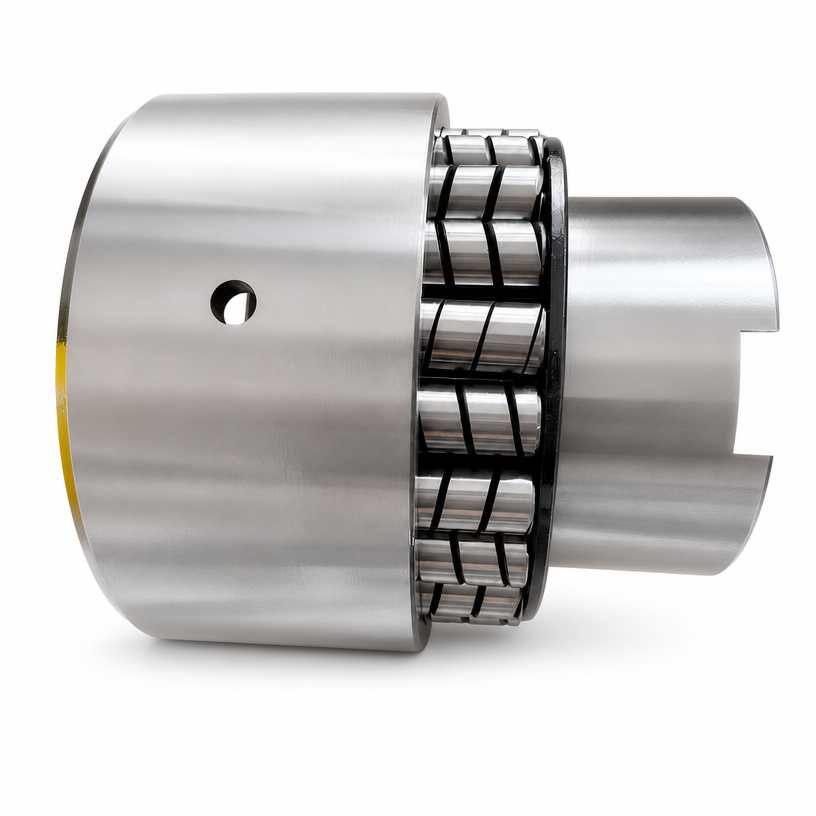
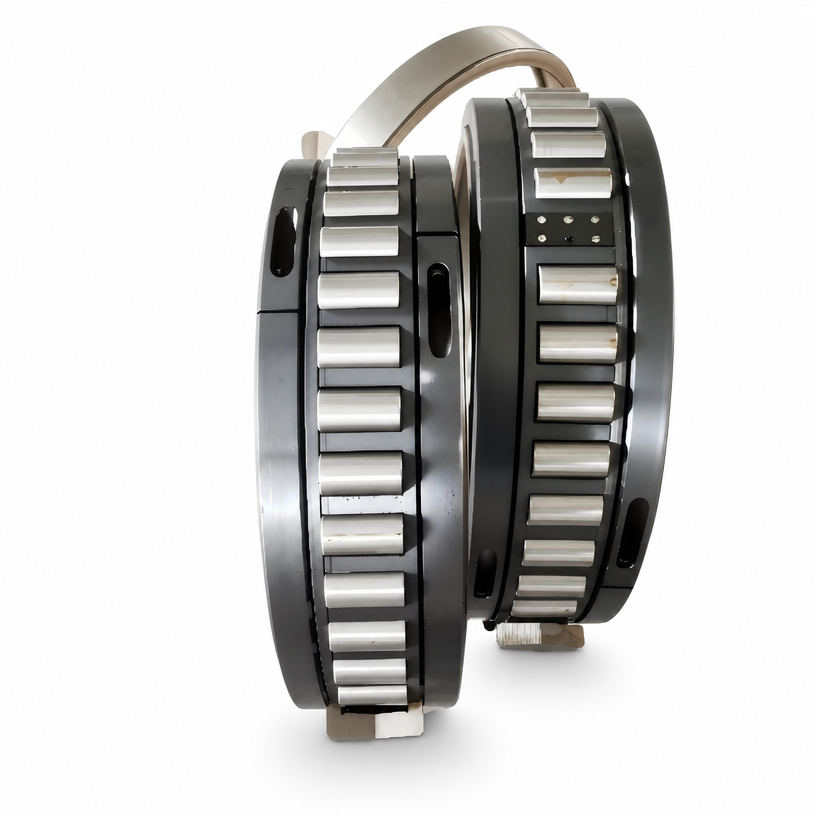
Spiral roller bearings are specialized anti-friction bearings featuring cylindrical rollers made from precision-wound flat spring steel. Unlike standard cylindrical roller bearings that employ solid steel pins, spiral rollers are coiled with a tight helical pitch. This hollow, spring-like geometry imparts unique mechanical compliance under heavy radial forces.
The fundamental operating principle relies on elasticity rather than rigid load distribution. When exposed to extreme operational pressures, the helical roller deforms elastically without permanent set, spreading stress uniformly across the raceway contact area. Additionally, the continuous outer spiral groove functions as a lubricant reservoir and a channel for fine debris, maintaining grease circulation during continuous operation.
Key Technical Advantages in Harsh Operating Conditions
High-load machinery subjects mechanical components to extreme vibration, thermal spikes, and abrasive particulate exposure. Spiral roller bearings offer specific structural benefits designed to counteract these failure modes:
Superior Shock Load Resistance: Solid rollers can micro-fracture or spall under sudden impact loads. Spiral rollers yield elastically, dampening shock energy before transmitting forces to adjacent housing structures.
High-Temperature Tolerance: Extreme heat causes standard solid bearings to expand radially, narrowing internal clearance and causing thermal seizure. The hollow center of a spiral roller absorbs heat-induced radial growth, preserving operational clearance at elevated temperatures.
Contamination Channeling: Industrial lubricants often accumulate scale, dust, or metal shavings. The outer helical gap naturally flushes particulate matter into non-critical spaces, lowering abrasive wear on precision raceways.
Accommodation of Shaft Deflection: Long drive shafts and heavy rolls inevitably flex under load. The compliance of spiral rollers compensates for minor angular misalignment, preventing edge-loading stress concentration.
Comparative Performance Analysis: Spiral vs. Standard Solid Roller Bearings
When evaluating mechanical design choices, spiral roller bearings and standard solid roller bearings present fundamental differences in load handling, rotational limits, and environmental resilience.
In terms of primary failure resistance, spiral roller bearings excel at withstanding severe shock loads, thermal expansion, and severe shaft deflection. Standard solid roller bearings, by contrast, are engineered primarily to resist pure radial fatigue under steady, rigid operating conditions.
From a structural flexure perspective, spiral bearings offer high elastic deformation, absorbing sudden physical impacts that would otherwise cause micro-spalling in solid rollers. Solid cylindrical rollers maintain a rigid structure with minimal yield, providing exceptionally high static radial load capacity but offering virtually no cushioning against impact shocks.
In operational speed capabilities, standard solid roller bearings comfortably support high-speed rotational environments exceeding 8,000 RPM, such as electric motors and automotive drivetrains. Spiral roller bearings are limited to low-to-moderate speed applications, typically operating under 1,500 RPM, as centrifugal forces can affect their flexible helical geometry.
Regarding environmental tolerance, spiral roller bearings demonstrate superior resilience against contaminants. The continuous outer helical groove provides a self-cleaning path that channels dirt, dust, and scale away from the main contact zone. Standard solid bearings require strict seal integrity, as abrasive particles rapidly cause surface pitting on rigid raceways.
Finally, thermal management diverges significantly between the two designs. Under elevated temperatures, hollow spiral rollers absorb radial growth internally, maintaining necessary operating clearance without seizing. Standard solid bearings expand outward against raceways, requiring precise C3 or C4 internal clearance selections to prevent thermal lockup.
Industrial Applications and Engineering Contexts
Spiral roller bearings deliver maximal value in heavy industrial sectors where machinery operates under continuous stress, high heat, and raw material contamination.
1. Steel Rolling Mills and Continuous Casting Lines
In hot rolling mills, roller tables transport red-hot steel slabs at temperatures exceeding 800°C. Radiant heat quickly transfers to support bearings, while cooling water and mill scale flood the housings. Spiral roller bearings resist thermal binding and prevent roller seizure caused by scale ingress, reducing unscheduled line stoppages.
2. Mining Equipment and Heavy Material Handling
Vibrating screens, primary jaw crushers, and long-distance bulk belt conveyors experience intense cyclic impacts. Conventional rigid bearings frequently suffer from raceway fatigue due to severe shock loads. Substituting spiral roller bearings cushions impact forces and extends bearing maintenance intervals by up to 40% in field operations.
3. Paper Mills and Industrial Drying Cylinders
Drying rolls in papermaking machines experience continuous steam heating and significant shaft thermal elongation. Spiral rollers deform predictably along the axial vector, accommodating structural thermal expansion without increasing internal friction or requiring oversized housing designs.
Procurement and Engineering Selection Guide
Procurement managers and plant engineers evaluating replacement or OEM bearing specifications should consider several key technical factors:
Assess Speed vs. Load Profile: Spiral bearings excel under moderate rotational speeds combined with high impact or misaligned loads. For high-speed applications exceeding 3,000 RPM, standard solid cylindrical or precision spherical bearings remain the preferred choice.
Verify Lubrication Compatibility: Use high-viscosity extreme pressure (EP) greases or heavy gear oils. The internal channels of spiral rollers require sufficient lubricant mobility to flush contaminants outward effectively.
Check Shaft Tolerances: Because spiral rollers offer greater radial compliance, shaft journal surface preparation can accept slightly wider machining tolerances than those demanded by ultra-precision needle or solid roller assemblies.
Evaluate Total Cost of Ownership (TCO): While spiral roller bearings may carry specific manufacturing considerations, their ability to prevent catastrophic shaft scoring and emergency mill shutdowns significantly yields lower long-term operating costs.
Frequently Asked Questions (FAQ)
What is the main difference between a spiral roller bearing and a solid roller bearing?
The main difference lies in roller construction. Spiral roller bearings use rollers formed from coiled flat spring steel strips, creating a hollow, flexible cylinder. Solid roller bearings utilize solid steel pins. This helical design gives spiral bearings higher elasticity, better shock load dampening, and superior tolerance to thermal expansion.
Can spiral roller bearings replace standard cylindrical bearings directly?
In many heavy-duty applications, yes, provided boundary dimensions match standard ISO or ANSI envelope sizes. However, engineers must review operational speeds, as spiral roller bearings are optimized for low-to-moderate speed environments with high shock or thermal challenges.
How do spiral roller bearings handle severe dirt and scale contamination?
The helical gap created by the wound steel strip acts as a natural groove. During rotation, this spiral channel traps fine abrasive particles and channels them away from the primary load zone, reducing raceway pitting and extending lubricant effectiveness.
Are spiral roller bearings suitable for high-speed machinery?
Spiral roller bearings are generally not recommended for high-speed machinery. Their elastic structure and higher mass flexibility can generate centrifugal imbalance at elevated RPMs. They perform best in slow-to-medium speed, heavy-duty applications such as mill rolls, crushers, and heavy conveyors.
How does thermal expansion affect spiral roller bearing performance?
Thermal expansion has a minimal negative impact on spiral roller bearings compared to solid alternatives. As temperature rises, the hollow coiled roller compresses inward slightly, absorbing radial growth within its structure rather than locking tightly against the outer and inner raceways.
Post time: Sep-02-2026